
You could have the most engaging topic, a great host, and a comprehensive podcast promotion plan but if your podcast’s audio quality is bad it’s just not going to do well. Even your family isn’t going to want to listen to a podcast that sounds like it was recorded in a toilet. The casual podcast listener? They’ll pick a different podcast to listen to after just 20 seconds (or less).
We’re going to talk about what you need to have great podcast audio. It’s important to address echoes and set up your space to eliminate podcast sound issues before you hit record. Here are the tips you need for great podcast sound.
This post is based on sections of Casey Cheshire’s conversation with Liam Gousios on Creating The Greatest Show
Podcast Sound Quality: Echoes are the enemy.
There is so much focus on picking the right podcast mic. While picking a good microphone is important, even a Shure SM7B isn’t going to overcome echoes in your recording area. Parallel walls, corners in rooms, and hard flat surfaces can do funny things to sound.
Setting up the right environment for podcast recording should be your first priority. It doesn’t have to be fancy and it doesn’t have to cost a lot. Here are 4 ways to overcome echoes in your podcast recording space, whether it’s a closet under the stairs or your office. We discussed how to pick the right room to record in here.
READ MORE: Essential Podcast Equipment Checklist
Absorb echoes with blankets when recording your podcast.
Who said you couldn’t be a grown-ass adult with a blanket fort? Seriously though the most cost-effective way to counter echoes is with blankets. The soft surface of the blankets absorbs soundwaves that would otherwise hit a wall and reflect back towards you and your mic.
So go ahead and hang blankets in front of your recording setup. The heavier the blanket the better. Surround yourself on all sides if you’d like to.

Use Acoustic Foam the Right Way
No, you don’t need to pad all of the walls. Using acoustic foam in the right spots will improve your podcast audio quality. This is especially true if you’re in a room with hard, parallel walls and 90° corners.
While the exact arrangement will depend on the size and shape of your room we’ve got a basic setup illustrated for you. You’ll want to put foam on all four sides of you and also use foam to fill in corners. Dealing with corners is a necessity for anyone that is not recording in a yurt or a Delta-09 Minuteman Missile Silo.
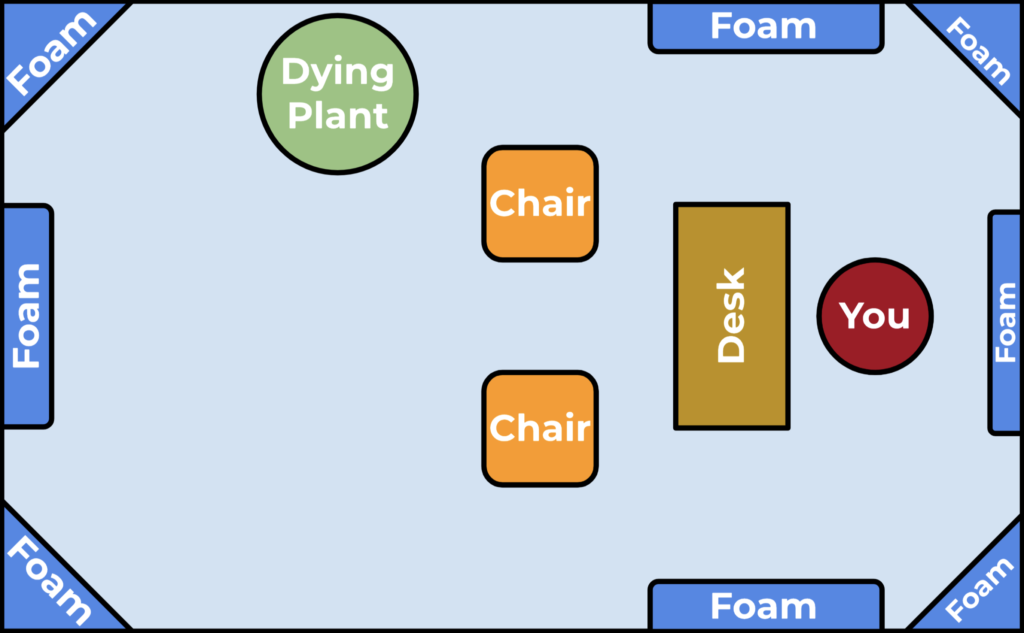
Add things to the walls.
Bare walls, especially parallel bare walls, are terrible for podcast sound quality! Paintings, canvases, or even the odd medieval tapestry will help give your listeners a better experience. Soft surfaces absorb echoes. Doing video with your podcasts? Pick a great-looking tapestry for behind you or print up a custom-branded banner to hang. Branding and echo reduction in one? Score. As a bonus, hanging your child’s framed art projects up on the walls will both aid your audio quality and add flair to your recording room.

The floor is lava.
We’ve left out one of the largest surfaces in your room. The last area to address is the floor of your room! The floor is one of the largest surface areas in a room and will produce echoes if it is left unaddressed. However, even if you’re working with a concrete, tile, or hardwood surface you can fix it! Rugs are great at absorbing sound waves. If you already have wall-to-wall carpeting, good for you. Utilizing area rugs, especially around your recording area will help with podcast sound quality.

Testing Podcast Sound Quality
You’ve made the changes. Here’s how to see if it actually made a difference. First, clap in different areas of the room. Can you hear an echo? No? You’re ready to record. Yes? Go back to our four ways to fix audio echoes above and implement another fix.
Second, move on to a test run recording. Go ahead and talk to yourself while rolling for a few minutes. Sit down afterward and listen to see if your podcast sound quality has improved.
READ MORE: How to Position a Microphone for Great Audio
Ready to Hit Record?
Now that your space is ready you’re one step closer to great podcast audio. You may still have questions though. We cover other important podcast sound quality topics like picking the right podcast microphone in our next post.
Want to learn even more about B2B podcasting?
You can schedule a time to chat with Casey right here.